
Poznań is unable to modernize its legendary arena, so it’s turning to… building a new one. It wants to use this new facility to further develop a sports complex in an environmentally valuable area. At the same time, it views plans to restore an important stream there with suspicion. Residents are skeptical and have been calling for dialogue for years. The authorities have no intention of “giving in” to them .
Poznań treats its great treasure—the system of four green wedges— in a very uneven manner . In principle, it protects it: in general and local plans, the city’s development strategy, and other documents. The details, however, are a different story—which I’ll touch on briefly now and discuss in more detail shortly, using the examples of Golęcin and the Bogdanka River, which has been buried for decades. The city, which (through the Poznań International Fair, a body in which it holds a majority stake) was unable for eight years to modernize the iconic Arena sports and entertainment hall (we wrote extensively about this—nomen omen—spectacular failure in March) now wants to build a large track-and-field stadium in Golęcin, within the western green wedge . It is also open to other large-scale construction projects in this area. However, it is reluctant to consider proposals to restore the Bogdanka stream—the most important left-bank tributary of the Warta River—which is currently hidden underground. It also communicates sparingly, even stingily, with residents and their representatives on this matter.
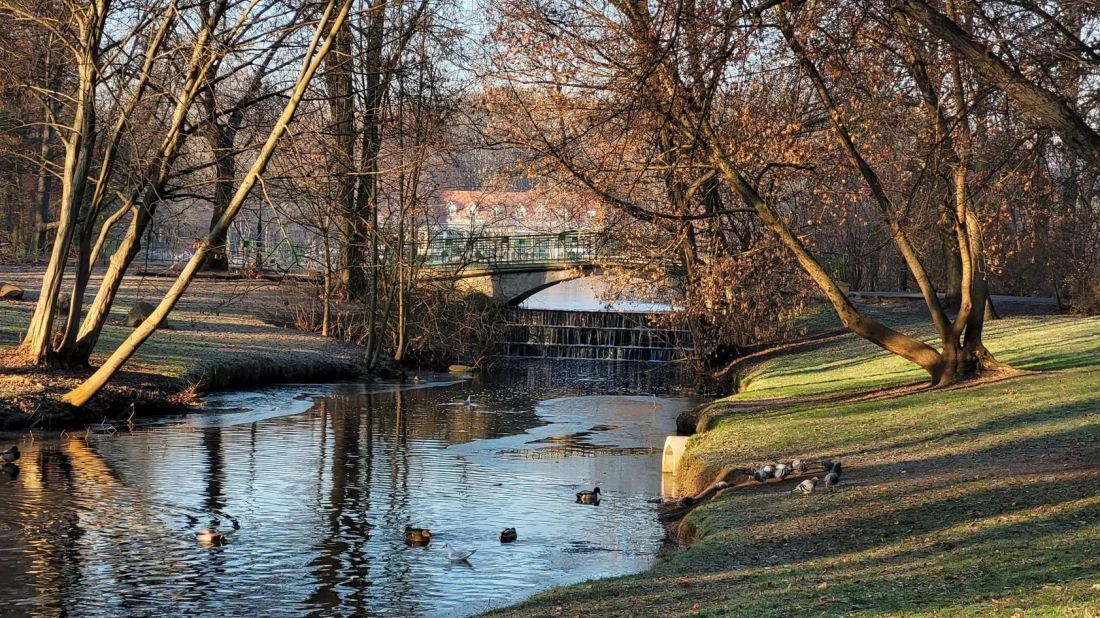
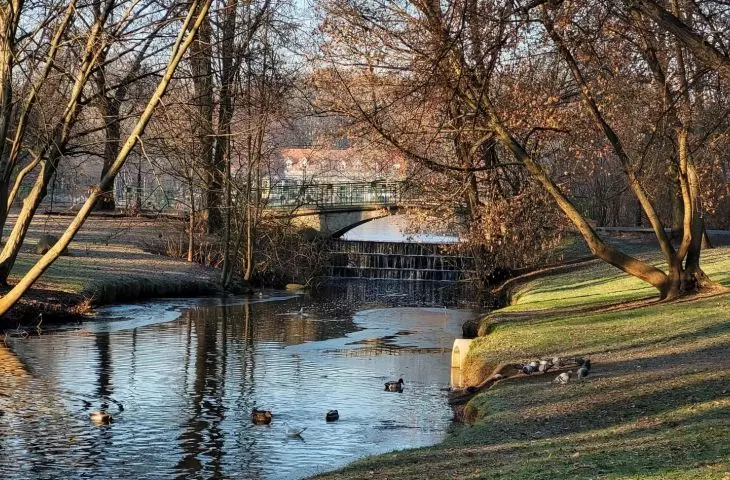
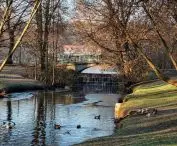
The Bogdanka in Sołacki Park
Photo: Jakub Głaz
A damselfly in a green wedge
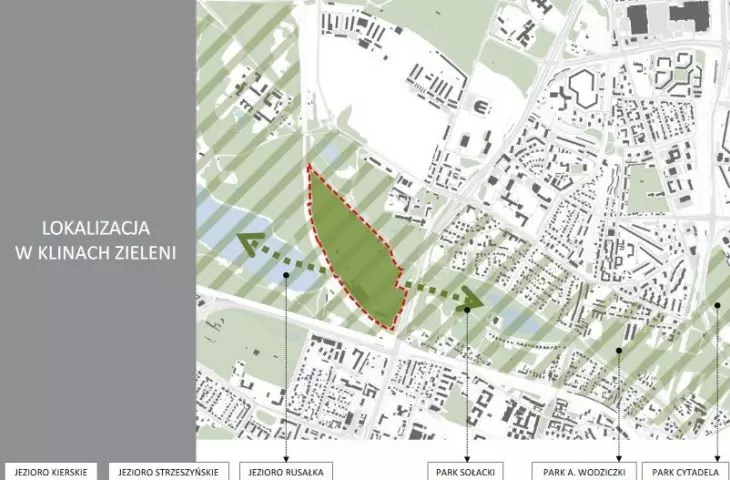
What are green corridors? Why are they so valuable? They are wide strips of forest and parkland —each cutting into Poznań from a different cardinal direction. Each connects the outskirts with the city center. The “backbone” of each is a river or stream (the Warta running north-south, the Bogdanka from the west, and the Cybina to the east). Individually, they are nothing extraordinary; similar green corridors exist elsewhere. But in Poznań, they form a kind of cross that divides the city into four parts. It is a unique natural and landscape system — the city’s air conditioner. It ventilates the city, regulates temperature and humidity, and serves as a water retention system. The wedges also function as ecological corridors, and it is crucial that their continuity remains unbroken by large-scale development projects. Last but not least, they serve as places for rest and recreation for all residents. They begin with parks near the city center and transition seamlessly into forested areas on the outskirts. The eastern and western wedges feature lakes, numerous ponds, and two large artificial bodies of water: Maltańskie, with a regatta course (east), and Rusałka (west).
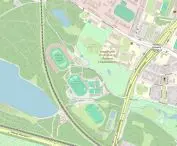
Rusałka is located in Golęcin, next to the prestigious Sołacz villa district, whose origins date back to the second decade of the last century. It is here that the Bogdanka Stream, which feeds the lake, has been flowing into an underground canal for nearly 80 years, just beyond the lock at the eastern end of the lake. It flows underground through the sports complex and beneath the expressway on Witosa Street (approx. 700 m). It resurfaces in the historic Sołacki Park, where it feeds its ponds.
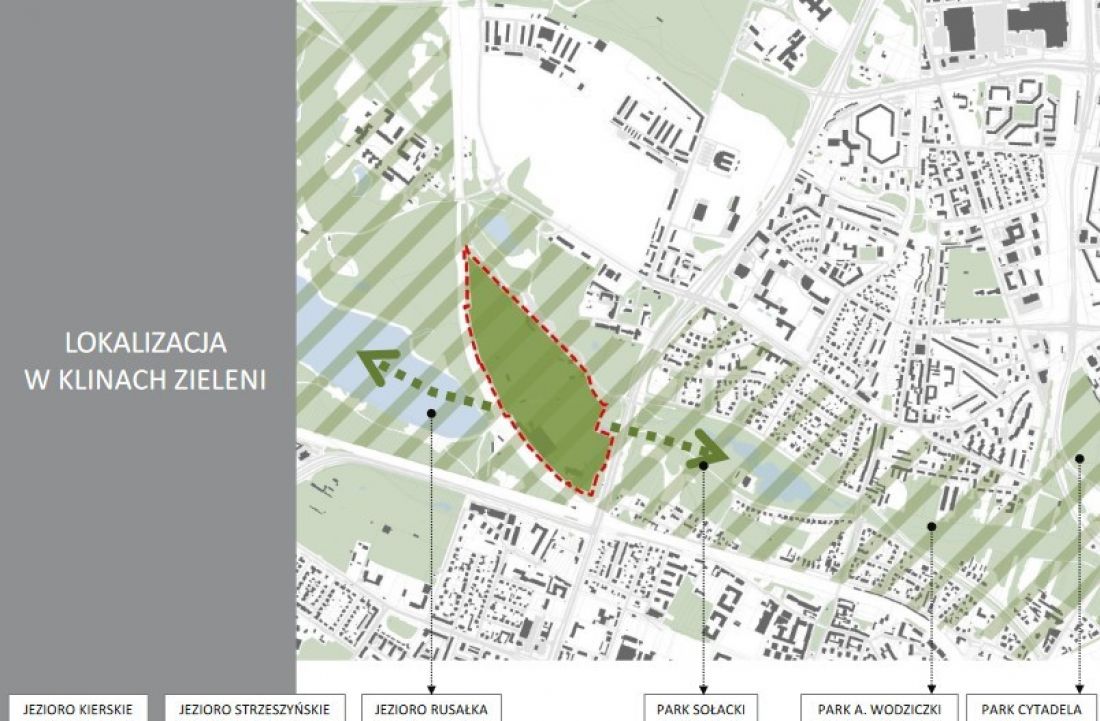
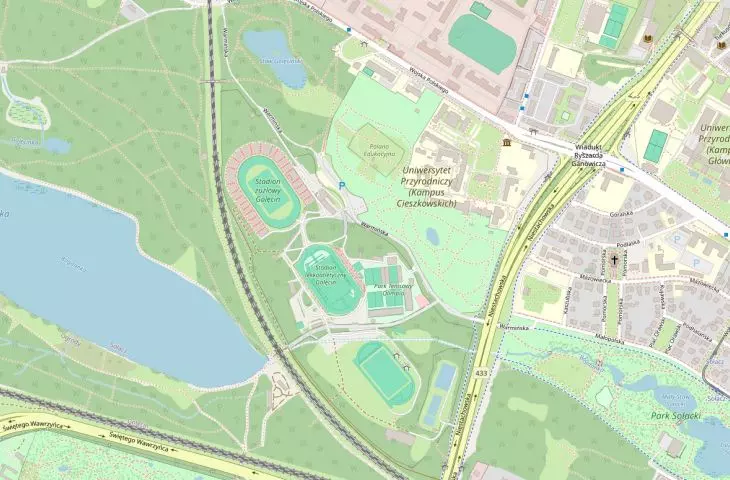
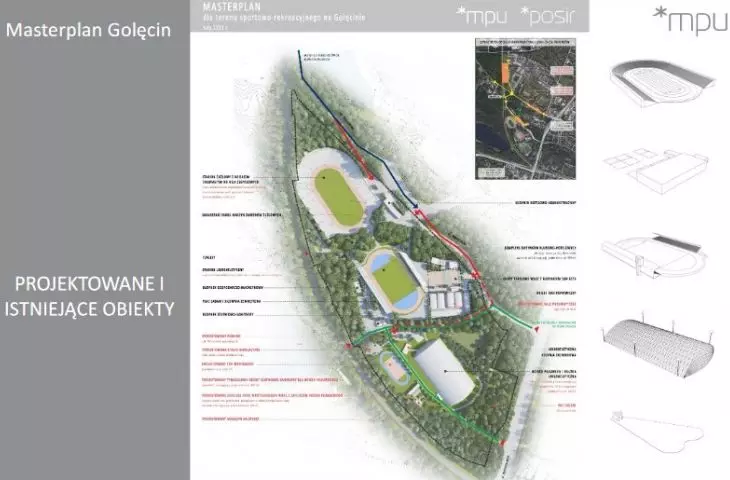
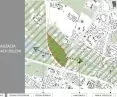
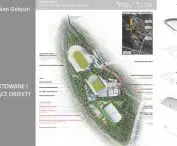
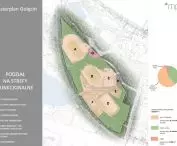
Sports facilities in Golęcin, Poznań — MPU “master plan” — situation in the western green wedge
source: Municipal Urban Planning Studio in Poznań, www.mpu.pl
For a decade, architects, naturalists, local council members, and community activists have been campaigning to correct a mistake made decades ago: the uncovering of the Bogdanka riverbed. They also advocate for a development plan for Olimpia—which is also heavily used by residents heading to the lake—that does not spatially isolate the sports complex from the natural structure of the western green wedge. They also want Olimpia to functionally and spatially connect—rather than divide, as it does today—Sołacki Park and Lake Rusałka. According to most associations and neighborhood council members, competitive sports and recreation can coexist here, but in balance.
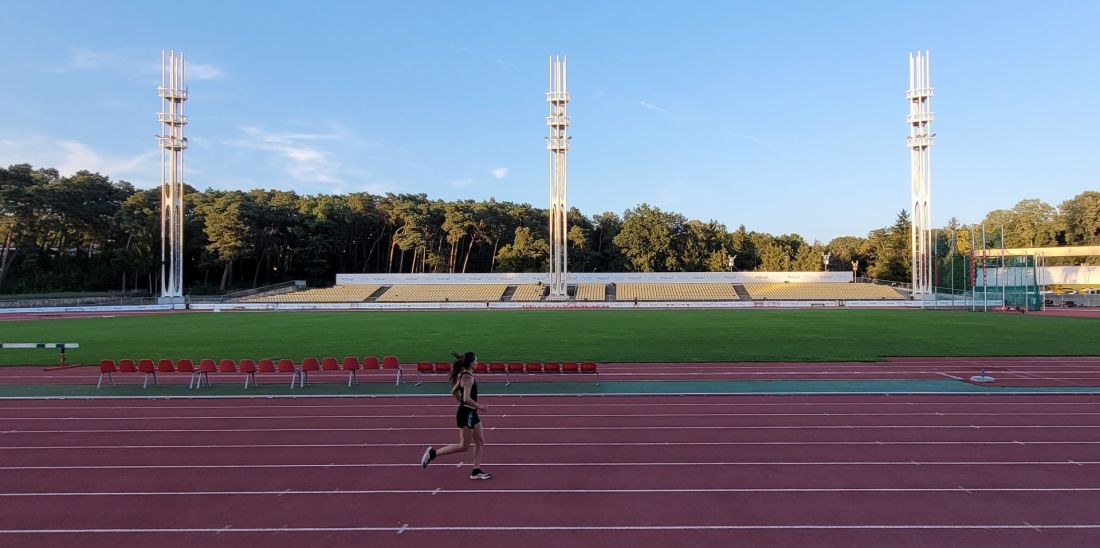
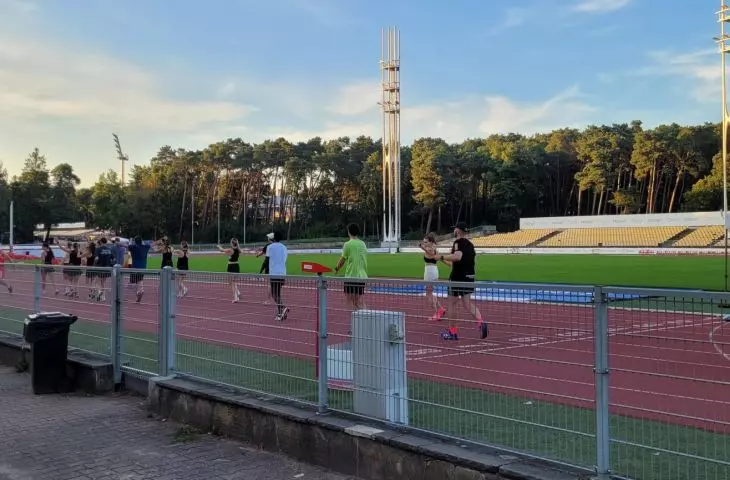
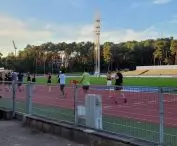
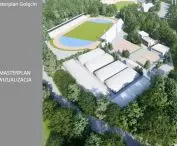
Sports facilities in Golęcin, Poznań — track and field stadium
Photo: Jakub Głaz
Militia officers in nature
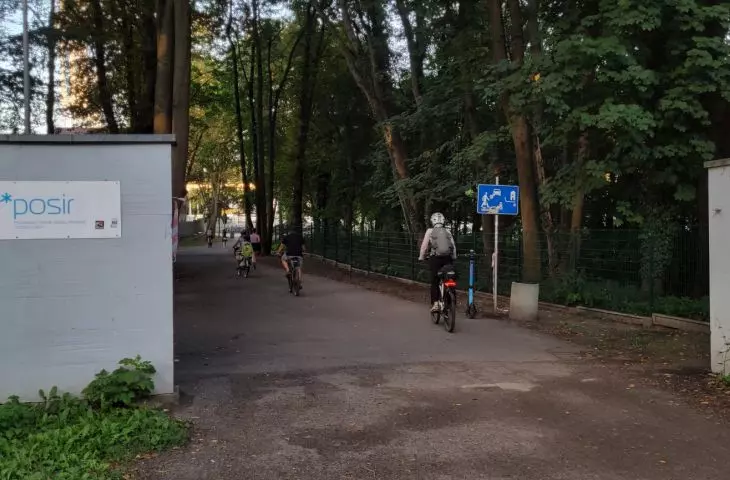
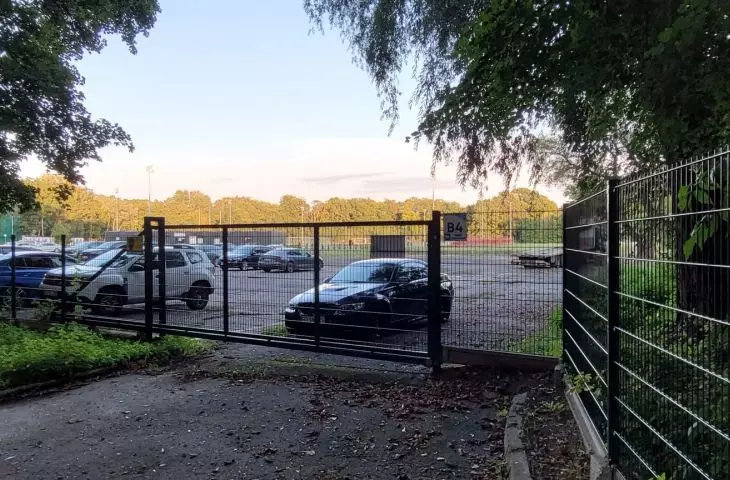
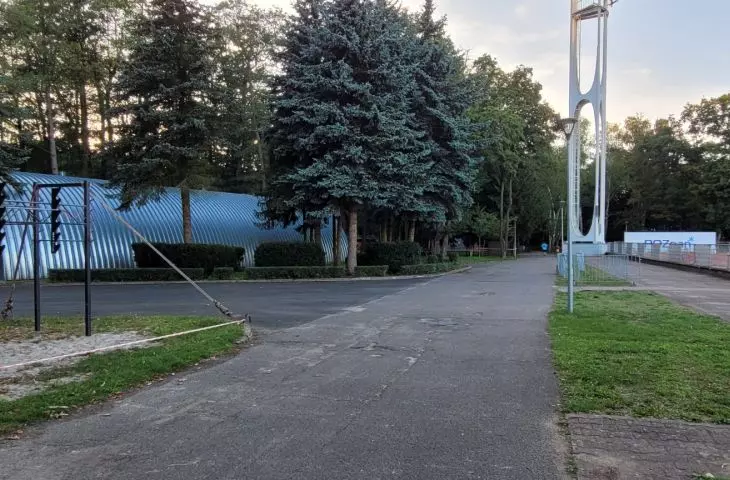
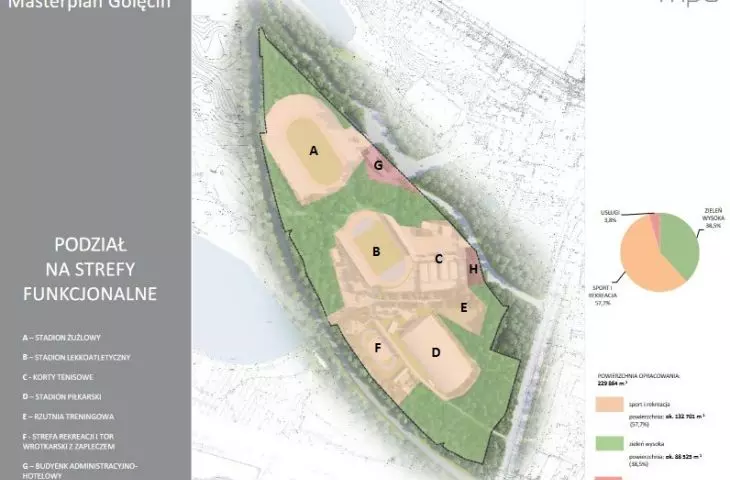
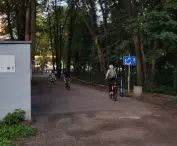
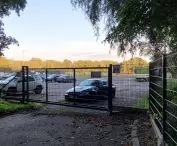
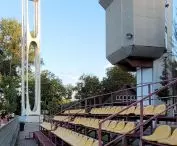
This picturesque sports complex with a soccer stadium was built in the 1950s for the Olimpia police sports club. The complex, situated between the embankment with the railroad tracks to Koszalin and the campus of the University of Life Sciences, was later expanded, particularly in the 1970s. Today , it houses a speedway stadium and an athletics stadium with supporting facilities, a new warm-up field built in 2020, a tennis center, tennis courts, a small hotel, and administrative buildings. The area is crossed by a narrow, long-abandoned road leading to the lake, used by pedestrians, cyclists, and cars heading to the large, fenced-in parking lot next to the warm-up field.
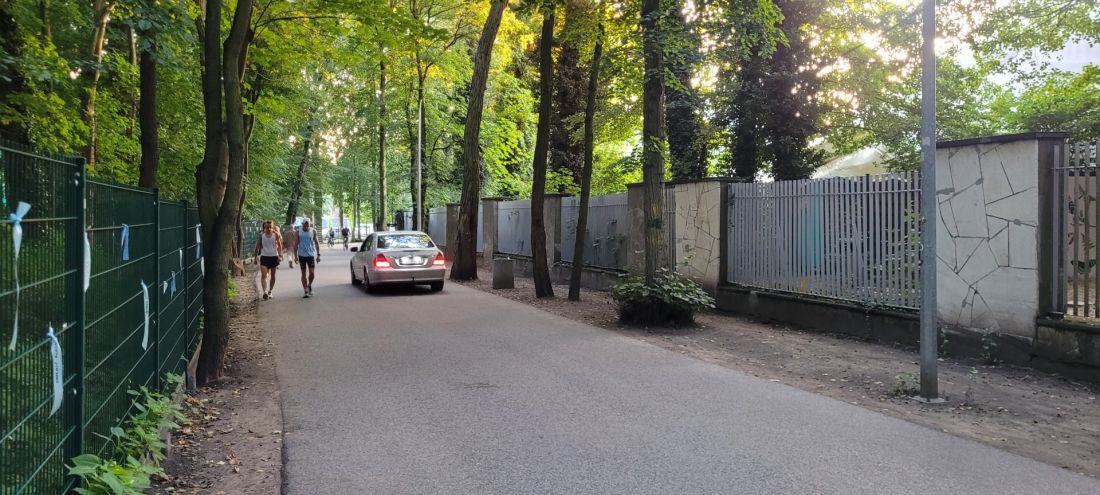
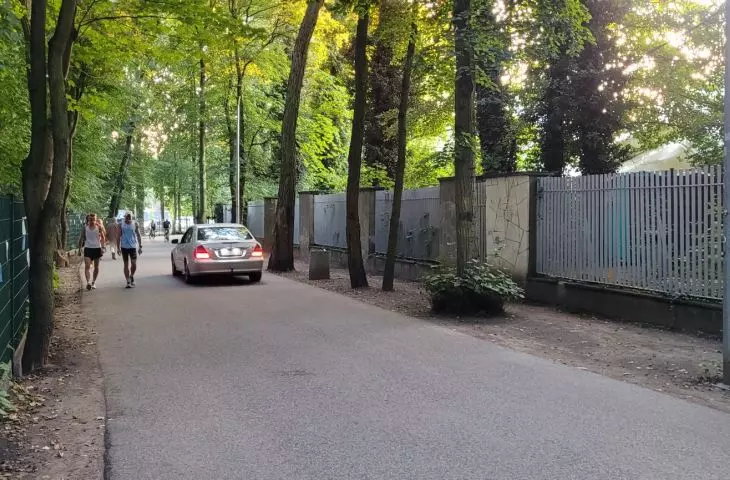
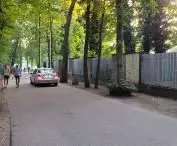
Sports facilities in Golęcin, Poznań — a “transit” road through the complex — used simultaneously by cars, pedestrians, and cyclists
Photo: Jakub Głaz
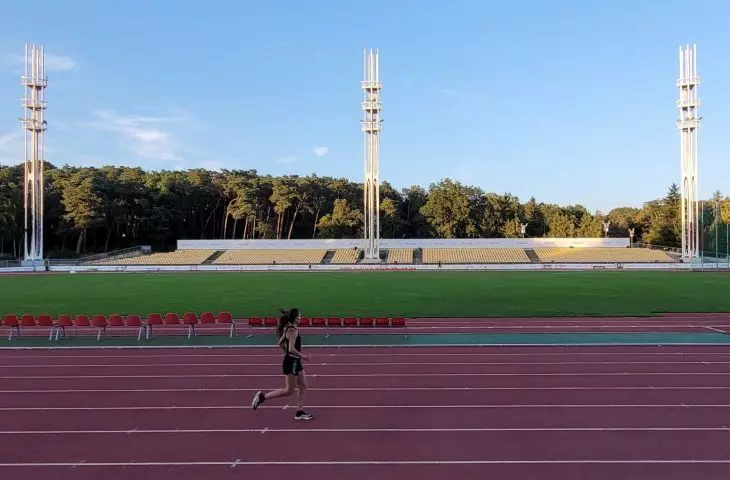
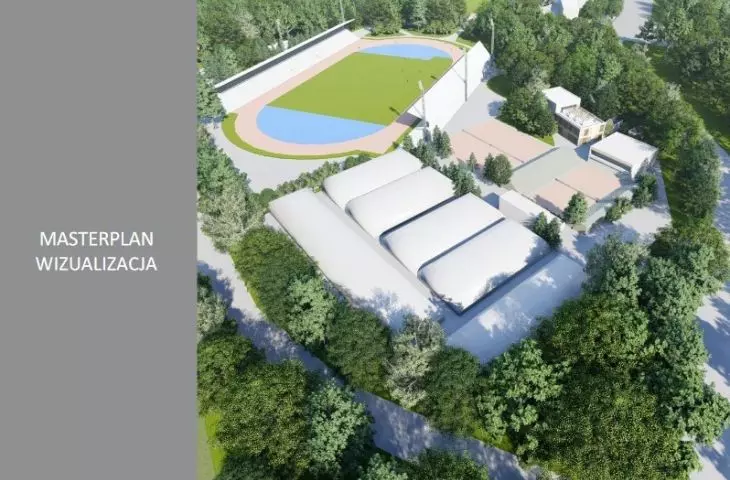
Now, this puzzle—which is partly sensible but also partly chaotic and logistically inefficient —is set to be joined by a new track and field arena, the details of which have been presented very vaguely by the City. This year’s announcements, however, did not — as in the cost-saving options considered a few years ago — of a small training hall, but of a larger building intended for both fall-winter training and sporting events for up to approximately 3,000 spectators (with stands set up). A single-level parking garage is planned for the basement, which would also serve as an emergency shelter (MDS). The arena, with extensive facilities and an additional warm-up track, would be built between the railroad tracks and the warm-up field, in a part of the complex that the community has for years identified as a location that does not conflict with the sports function and a potential link between Sołacki Park and Rusałka. Its final design is to be developed in collaboration between the City and the Polish Athletics Association.
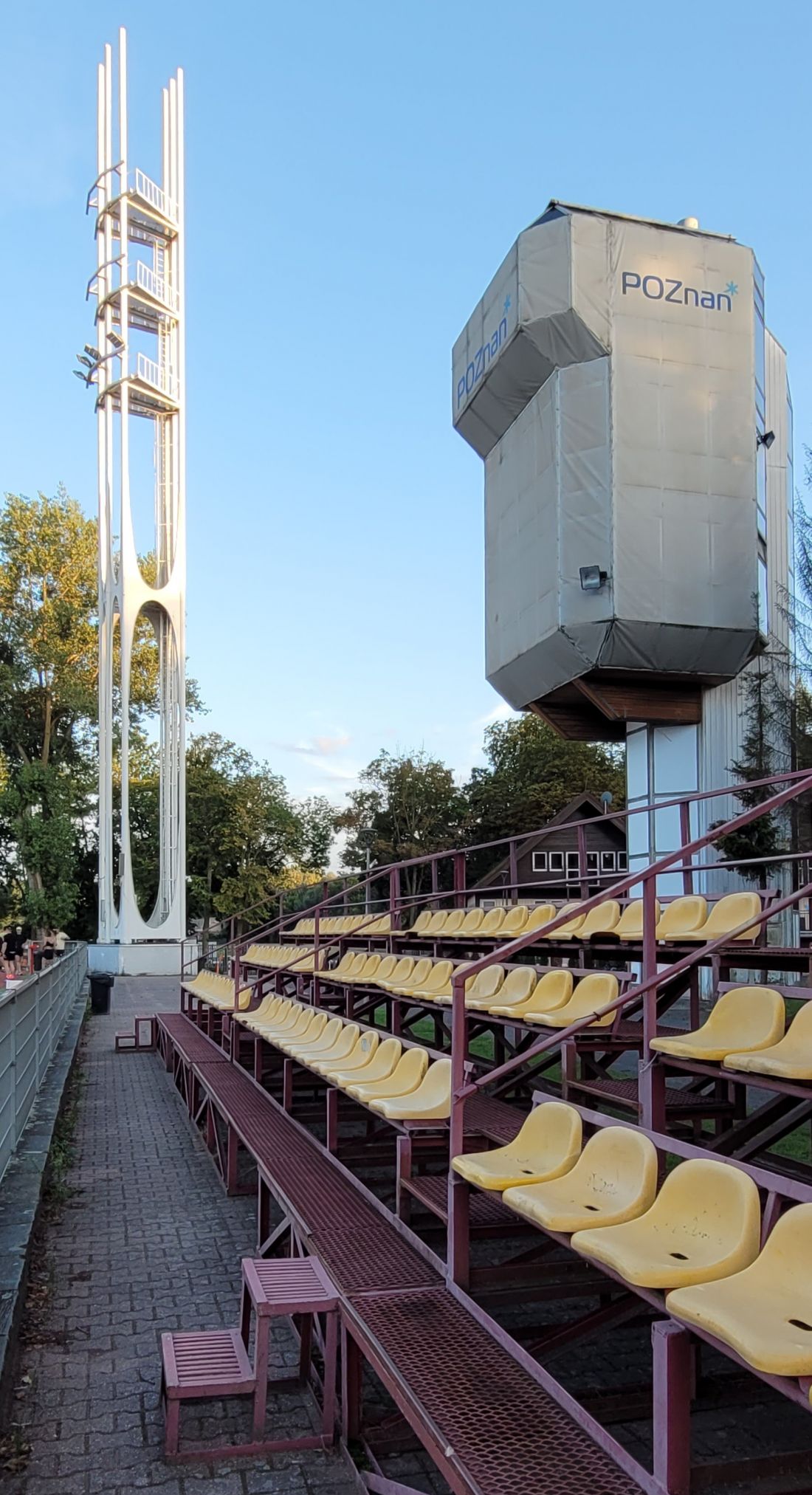
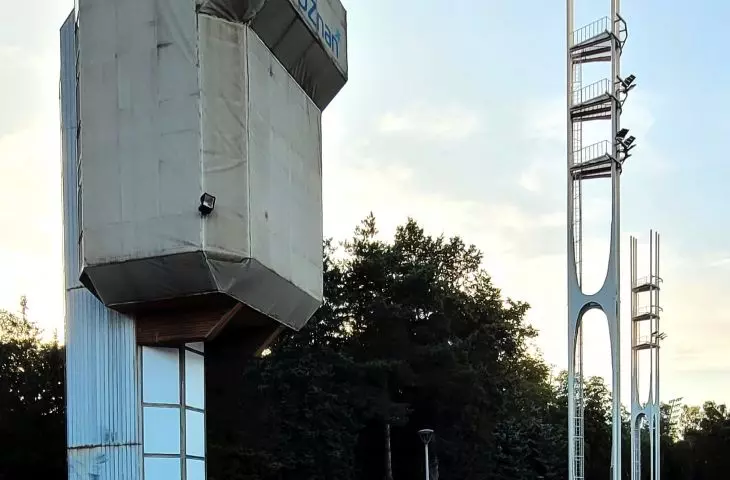
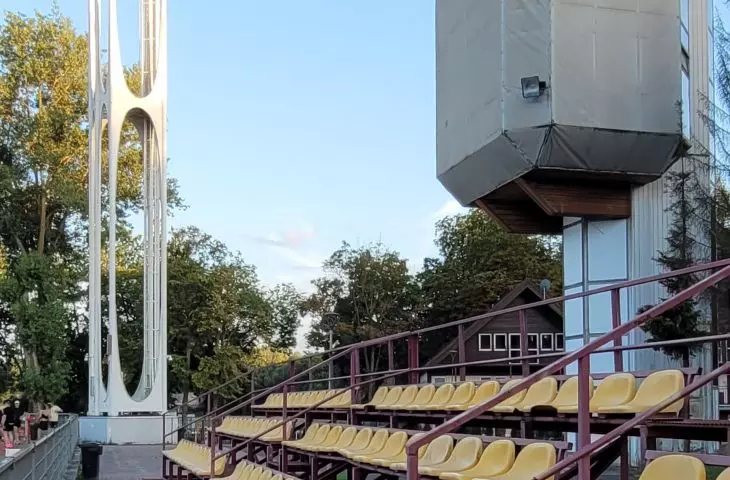
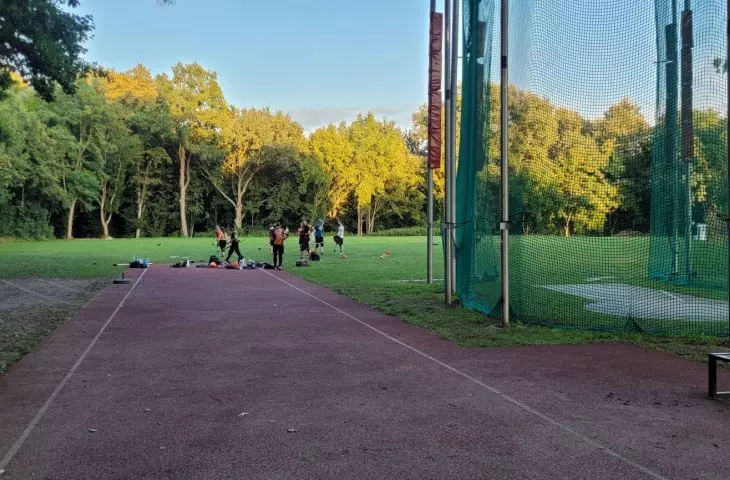
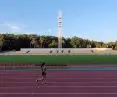
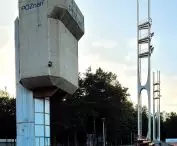
Sports facilities in Golęcin, Poznań — stands at the track and field stadium
photo: Jakub Głaz
an arbitrary decision
At the same time, the significance of the arena is presentedinconsistently . At one point, it is described as a facility of only local importance; at another, it is presented as a venue for major sporting events. This lack of specifics is surprising, as the arena in Golęcin (designed by Archimedia) was planned long ago, but the idea fell through because the City was unable to secure funding for its construction. Today, the more the scale of the arena grows in the plans, the stronger the opposition becomes—as expressed, among other places, on the well-informed and efficiently run website of the “Free Bogdanka” Initiative (there’s also a Facebook page). This is all the more surprising given the manner in which the matter was set in motion. Marcin Gołek, who has served as the city’s first deputy mayor for a year, announced in the spring that
over the years, various concepts had emerged, along with attempts at securing funding and the search for alternative locations. After analyzing them , I decided that Golęcin is the most appropriate location for this investment.
If we are to take these words at face value, not only did the final decision rest (solely?) not with experts, but also to an official without planning expertise; furthermore, he did not specify what spatial, transportation, logistical, and environmental analyses were taken into account. Nor did he present the advantages and disadvantages of the other locations under consideration. The current architectural design of the hall was not made public . Gołek merely announced in April that
Poznańskie Inwestycje Miejskie had just selected an architectural firm to update the project documentation [referring to the project mentioned above—ed.].
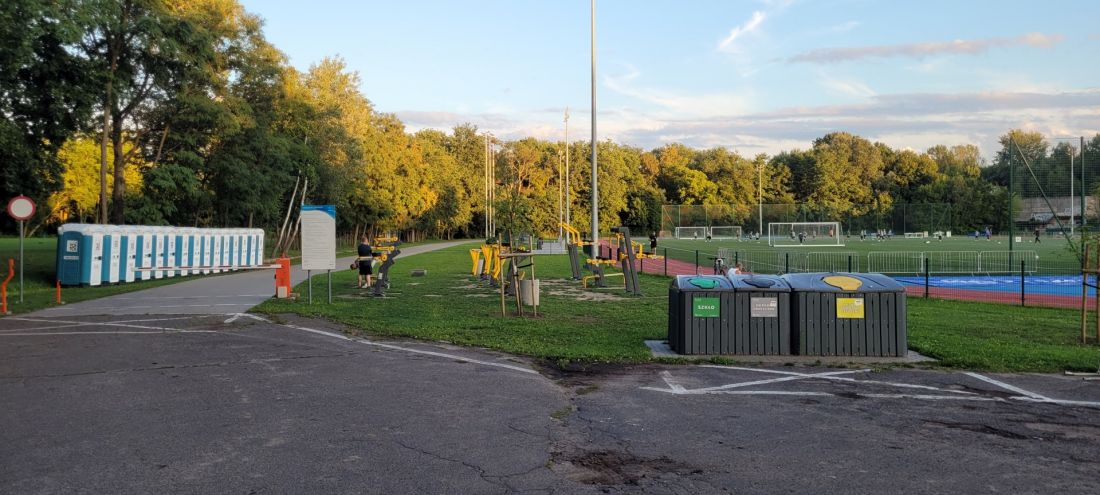
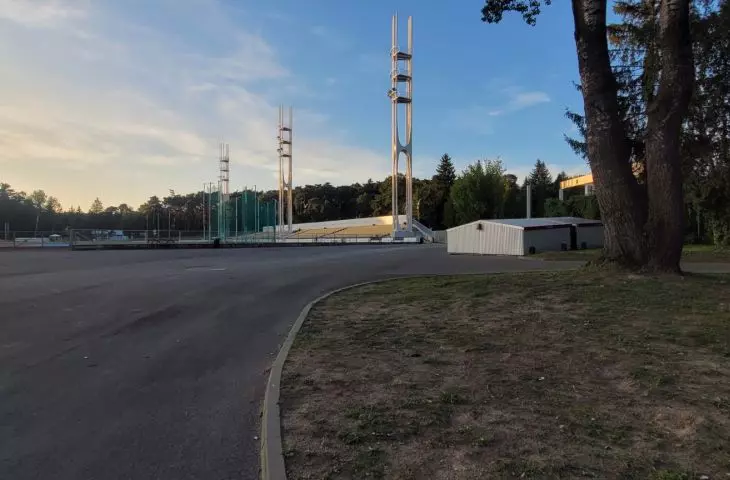
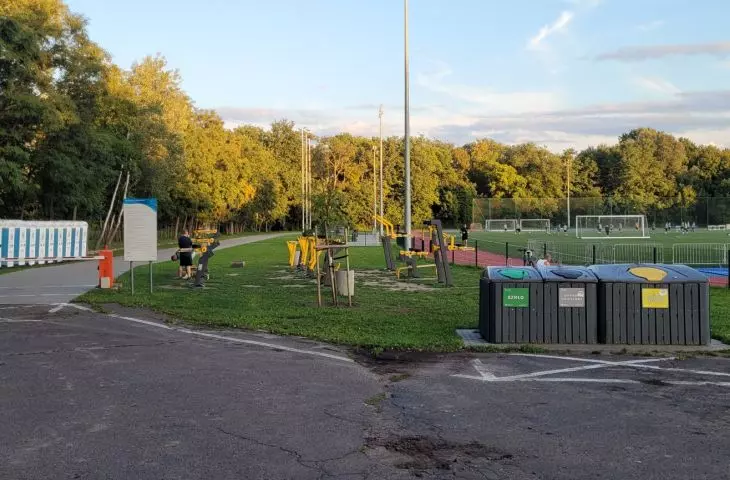
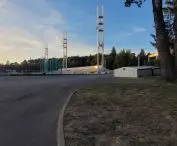
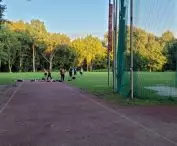
sports facilities in Golęcin, Poznań—the chaotic surroundings of the 2020 warm-up stadium
photo: Jakub Głaz
power is not a pole
Regarding the city’s plans, there has been no genuine dialogue with the Sołacz Neighborhood Council, which has been working pragmatically for years toward the optimal development of Golęcin. Nor were council members from areas adjacent to this site consulted. Instead, they heard statements from Gołek and the president of Poznań’s AZS, Tomasz Szponder. The latter said he hoped the city authorities would “not give in” (to the residents). Gołek thanked him for this and quipped:
“The only thing that will bend is the pole vault pole used by Monika Pyrek’s successors in the new track and field arena in Golęcin.”
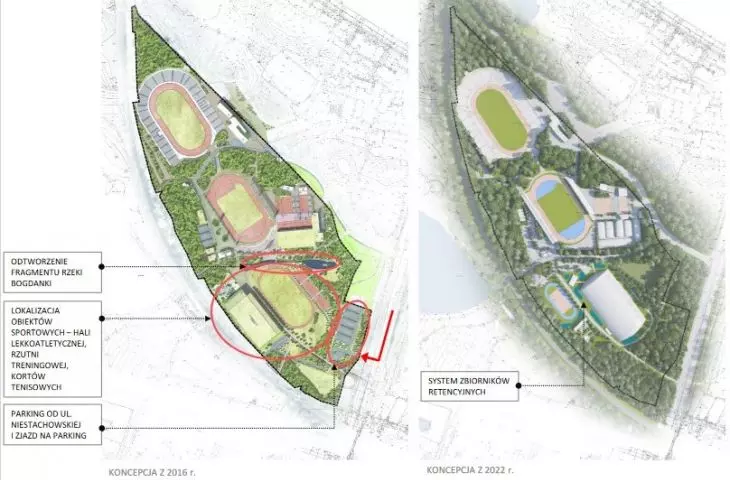
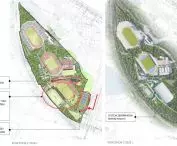
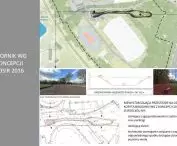
The demands of community activists, city council members, and architects are thus facing significant resistance— and not for the first time . A thoroughly thought-out concept for the Olimpia area was developed as early as ten years ago. Its authors— Andrzej Kurzawski (former city architect and president of the SARP branch) and Jakub Gwizdała —developed it in collaboration with community representatives, while taking the needs of athletes seriously into account. The plan roughly divided the area into two parts separated by the open channel of the Bogdanka River —the northern part for athletes and the southern part for all users.
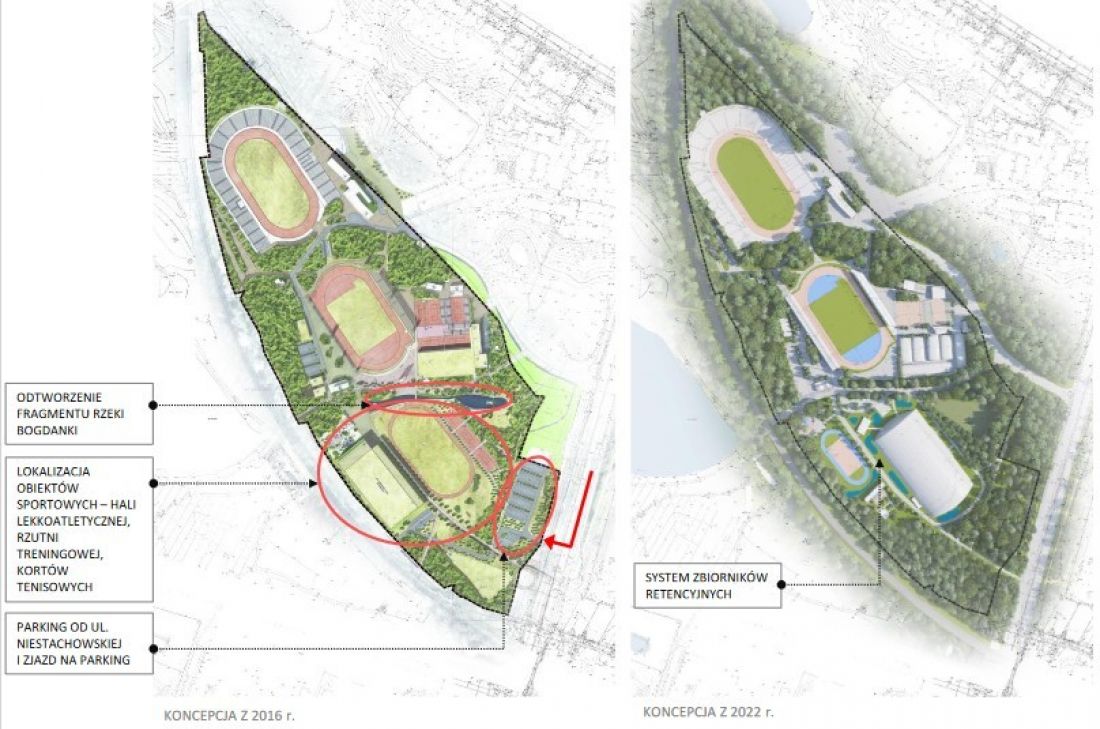
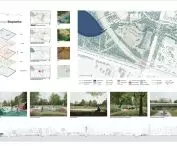
Sports facilities in Golęcin, Poznań — MPU “master plan” — Comparison of the community concept (left) and the city’s concept (right)
Source: Municipal Urban Planning Studio in Poznań, www.mpu.pl
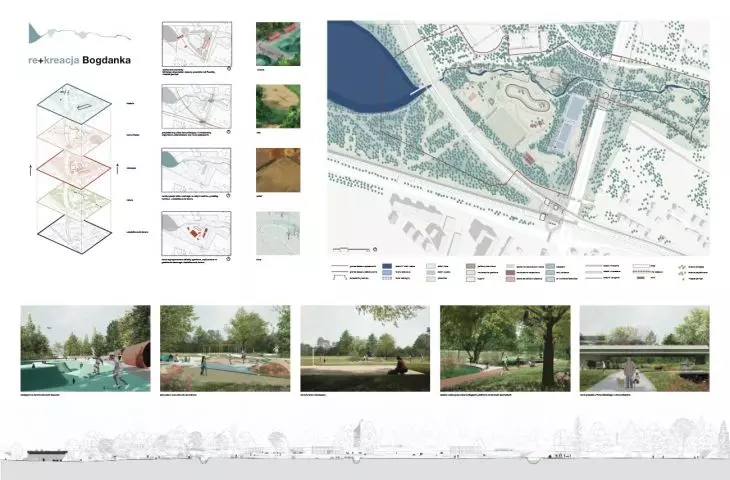
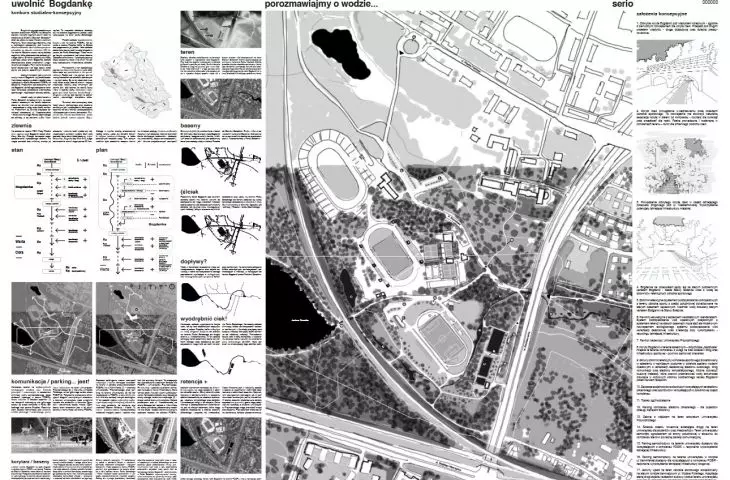
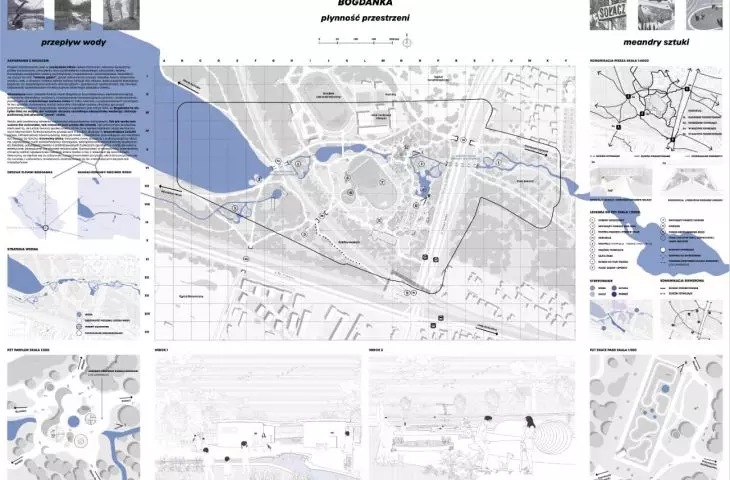
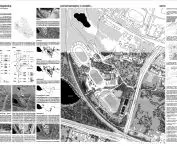
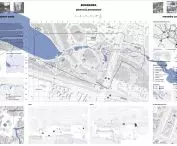
However, the issue was “forgotten” by decision-makers. Two and a half years ago, an attempt was made to remind them of Olimpia by organizing a student competition titled “Free the Bogdanka,” held in conjunction with the next edition of the Design and Architecture Forum. The Poznań branch of SARP was actively involved in this effort, and landscape architect Prof. Elżbieta Raszeja of the University of Arts (who, together with her husband Adam, had already been actively working on behalf of Golęcin). Nearly 60 entries were submitted to the competition ; the standard was high, and the winning entries were full of in-depth analyses that often went beyond the scope of the assignment. However, the exhibition of the works and the discussion surrounding them failed to attract the attention of decision-makers. Another issue: for several years now, the city budget has included an allocation of 150,000 zlotys earmarked for the “renaturalization of the Bogdanka Golęcin watercourse.” Until July of this year, however, these funds were frozen as a result of unclear decisions by officials. Furthermore, Poznań is required to renaturalize the Bogdanka watercourse by 2027 to meet the requirements of the EU Water Framework Directive.
Finally, since last year, Poznań has been proud of its inclusion on the international list of “accredited wetland cities, ” a distinction it owes, among other things, to the Bogdanka’s floodplains along other sections of the watercourse. And once again, to “remind” decision-makers of these facts ,a petition regarding the protection of Golęcin was prepared this spring and signed by nearly 2,000 people. Among other things, it called for
A moratorium on new development projects in Golęcin until a comprehensive analysis of the environmental, transportation, and infrastructure impacts is presented
In August, athletes countered with their own petition in favor of building the sports hall.
A fait accompli
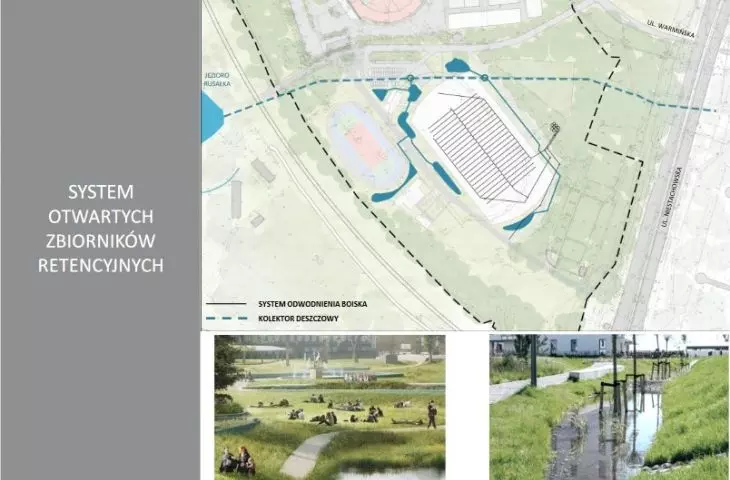
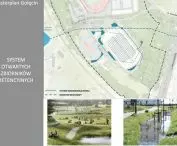
However, decision-makers remain resistant to the position of environmentalists and the public; they generally avoid the topic or postpone it to an unspecified future. Planners at the Municipal Urban Planning Studio have also been skeptical; three years ago, they presented — as we described in 2023 — a “master plan” for Golęcin that excluded the possibility of exposing the river, but instead… included retention ponds for rainwater runoff from the balloon-shaped arena, a structure of very low aesthetic value, incorporated into the concept. Now, in August, they submitted a draft local plan for Golęcin to the city council for adoption, in which they merely permitted—but did not mandate—the restoration of the riverbed, without specifying the exact area to be restored. A few months ago, the Mayor of Poznań also incorporated numerous pro-investment proposals from an anonymous individual into the draft plan for Golęcin. These proposals concerned, among other things, the expansion of a tennis center leased by a private entity. At the same time , proposals from community members and architects— including those concerning the renaturalization of the stream —were rejected without any public explanation. The planning process has recently accelerated because the finalized local zoning plan is intended to help the city secure funding for the construction of the sports hall.
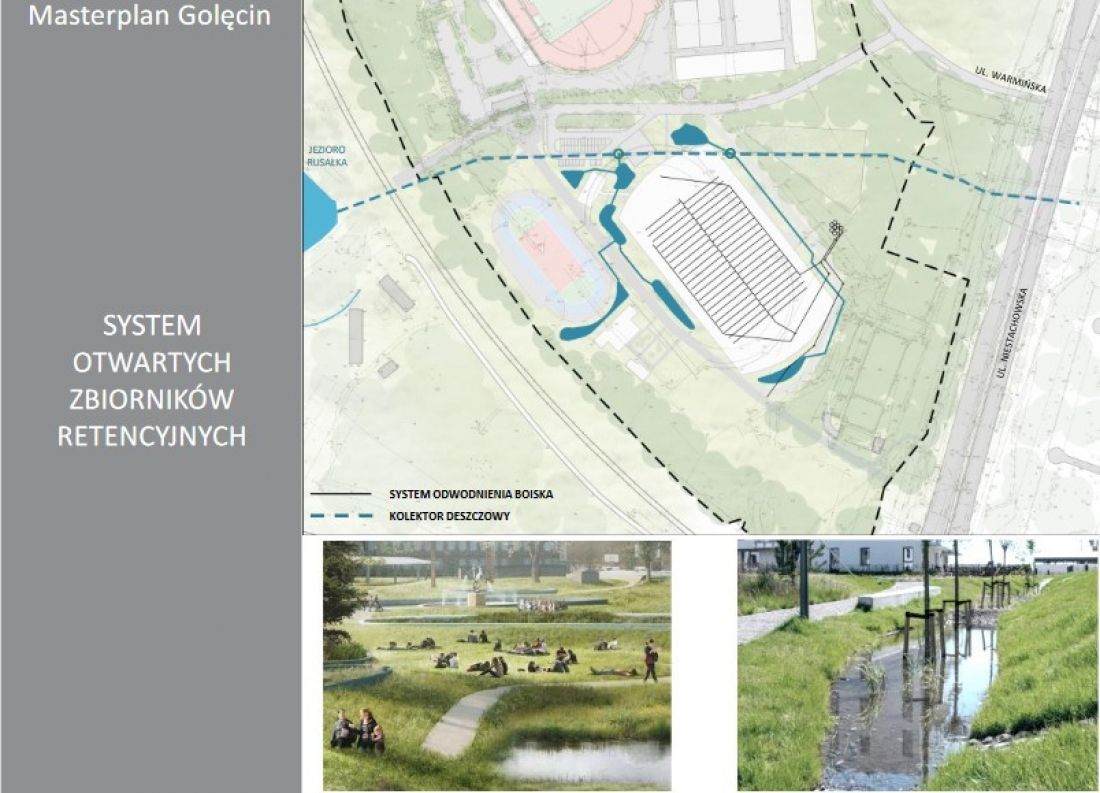
Sports facilities in Golęcin, Poznań — MPU “master plan” — Concept for retention basins (instead of excavating the river) according to the MPU’s 2023 plan.
Source: Municipal Urban Planning Studio in Poznań, www.mpu.pl
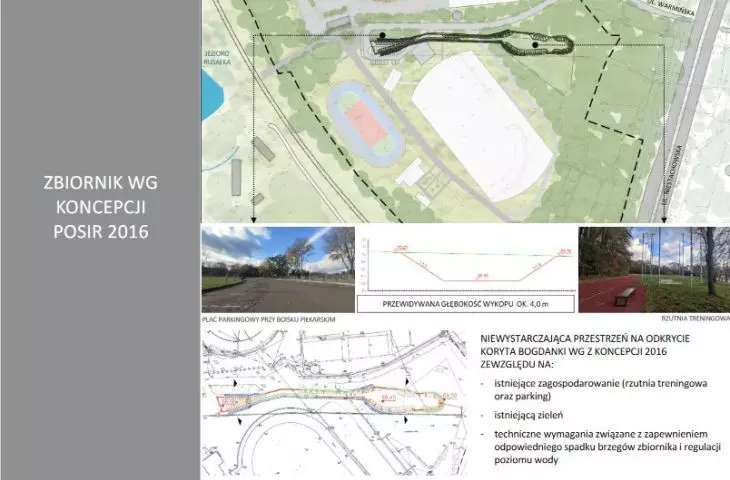
A lack of understanding and dialogue is also evident on the part of the Poznań Sports and Recreation Centers (POSiR), which have managed the facility since 2013 after taking it over from the Olimpia club (they recently “gained notoriety” for allowing the deterioration and demolition of the vacation center entrusted to them on Lake Kierskie— we wrote about this last winter). They have repeatedly stated (without presenting any hydrological analyses) that restoring the watercourse is nearly impossible (as it would flow at too low a level). POSiR also operated by creating a fait accompli: six years ago, they built the warm-up field already mentioned here at the site proposed by Kurzawski and Gwizdała for the river’s restoration.
In general, there is no consistently coherent, long-term plan—spanning decades —for Golęcin and its adjacent green spaces. There is also a lack of ambition to follow the example of other cities which take climate change and water scarcity issues seriously by restoring channelized waterways to the surface: from Seoul 20 years ago, through cities in the Netherlands, to Łódź, which is now restoring the Lamus River channel. This past summer, the Poznań branch of SARP therefore approached the mayor of Poznań with a request to organize a competition for a final design for Golęcin, taking into account the uncovering of the river and conducting analyses regarding a potential sports hall. We do not yet know the response. What we do know is that local council members had recently expected discussions with POSiR regarding the uncovering of the Bogdanka River, but—to their disappointment—they were merely informed that work on the sports hall had begun. As Grzegorz Okoński of “Głos Wielkopolski” summed it up in July:
No agreement is being reached because… there’s no common ground for discussion!
Instead of dialogue, what we hear from the authorities and sports officials is that Poznań needs the arena “right away,” “yesterday,” or “immediately.” That’s true (local Wielkopolska competitions can even take place in Wrocław!), but that’s no reason—given the city’s more than a decade of inaction on this matter—to now build an ad hoc arena in a highly controversial location, without a well-thought-out plan for the entire area.
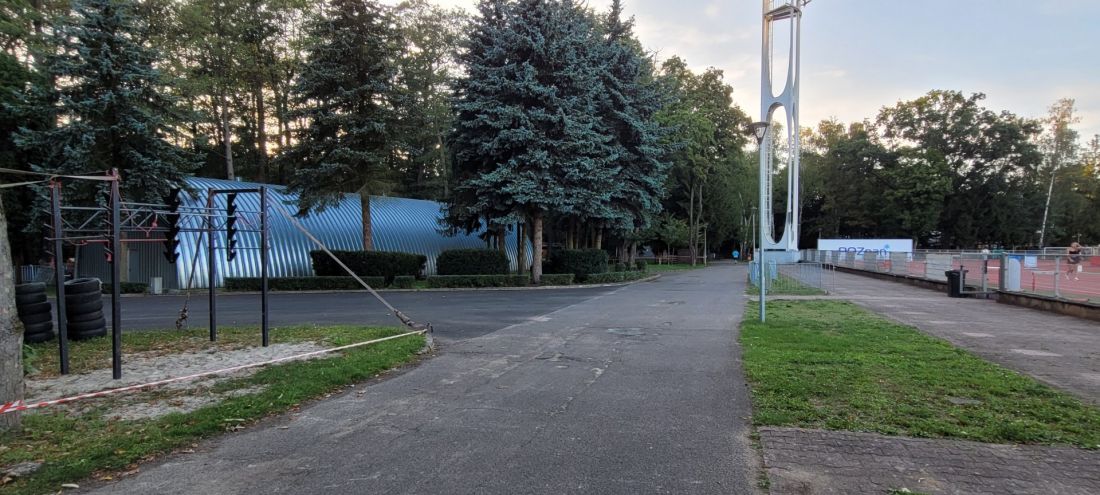
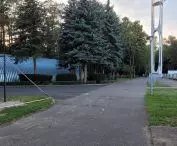
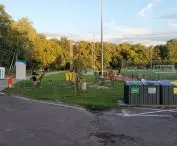
Sports facilities in Golęcin, Poznań — chaotic land use near the track and field stadium
photo: Jakub Głaz
A whole bunch of issues
What is needed right now, therefore, is not just a sports hall, but—above all— a serious, substantive dialogue regarding Golęcin. There are at least a dozen or so issues here that need to be clarified, elaborated on, or corrected. Let’s list a few of the most important ones:
First, Olimpia was built on the site of former agricultural and recreational lands, which contradicts the opinions of some planners and sports officials who have recently stated in the media that sports were “the priority” or “have always been there” in Golęcin . They vaguely declare the best possible symbiosis between nature and the planned infrastructure investments, but then often add that—thanks to the alleged primacy of sports—it is not recreation and nature that should take priority here.
In reality, the lands along the Bogdanka River were originally agricultural in nature. To the north of them, two estates—Sołacz and Golęcin—had existed for centuries. Before World War I, barracks were built nearby that still stand today. During the interwar period, the Sołacz farm was handed over to university naturalists (today it is part of the University of Life Sciencescampus), who established a dendrological garden next to their buildings . In 1938, the city’s first complex of outdoor swimming pools, fed by the waters of the Bogdanka River, was built on Niestachowska Street ( today Witosa Street ) according to a design by Marian Spychalski. The pools were closed in 1979 and have for years served as carp ponds for a private company that leases the municipal facility for a modest fee
Second, Golęcin, as part of the green wedge, is an element of a natural system developed according to a concept from the 1930s. This system of green wedges was identified, highlighted, and developed in the city’s plans by the then-head of the City Development Department, architect and esteemed urban planner Władysław Czarnecki, together with the equally esteemed naturalist, Prof. Adam Wodziczka. In the decades that followed , the green wedges were protected and reforested. Today, they also constitute a very valuable part of cultural heritage, regarding which decisions should be made on a substantive and transparent basis.
Third, Golęcin should be planned in conjunction with the neighboring Rusałka Lake, whose area is gaining new users year after year from the intensively developed part of the Jeżyce district (known as “Nowe Jeżyce”). It therefore seems necessary to conduct an in-depth analysis of the current volume of pedestrian, bicycle, and vehicular traffic and to assess whether Rusałka is beginning to become “overcrowded” and needs a “breathing space” in the form of the Golęcin area. It is worth noting that the lake—built during the war by Jewish and Polish prisoners —still has its shores reinforced with matzevot from Jewish cemeteries. Although the city, alerted by community activists, is aware of this, it has for years failed to take action to relocate the matzevot to a lapidarium.
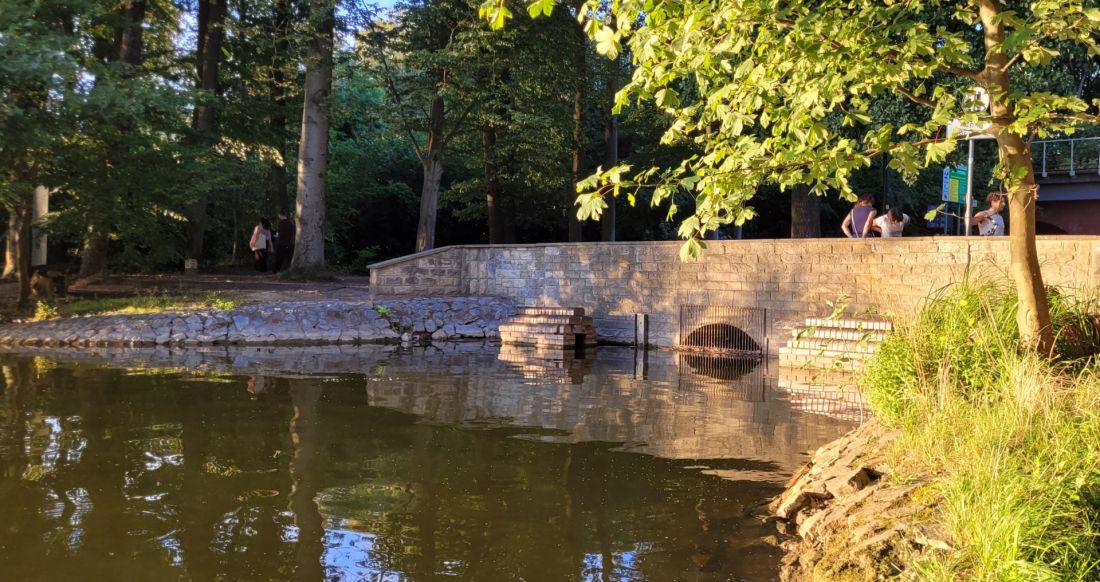
Lake Rusałka in Poznań, where the Bogdanka River flows into an underground canal
Photo: Jakub Głaz
Fourth, information regarding the environmental impact of the new arena’s construction remains vague and ambiguous, as community activist Tomasz Hejna —who runs the Facebook page “Gemela Poznańska”—recently demonstrated following a series of inquiries to POSiR. There is also a persistent lack of specific hydrological data. Exactly which route does the Bogdanka River take underground? What does the groundwater system in Golęcin look like (it has always been a wetland), and could it become a cost-increasing obstacle even during construction work (a preliminary analysis was conducted by the “Free Bogdanka” Initiative)? Tomasz Hejna, for his part, recently determined that the Bogdanka canal contains pipe inlets from the Olimpia area. What exactly is flowing through them? A comprehensive and reliable analysis of the situation is lacking. There is also uncertainty regarding the number of trees that will need to be cut down to make way for the arena. Environmentalists cite over 200 trees, while the developer cites about 100. Who is correct? Are these estimates or precise calculations?
Fifth, what did the analyses of other locations look like? What were their drawbacks? Why wasn’t the dilapidated AZS arena on Pułaskiego Street (closer to the city center and better connected by public transit) taken into consideration—a site where the construction of a new facility was already being considered a quarter of a century ago?
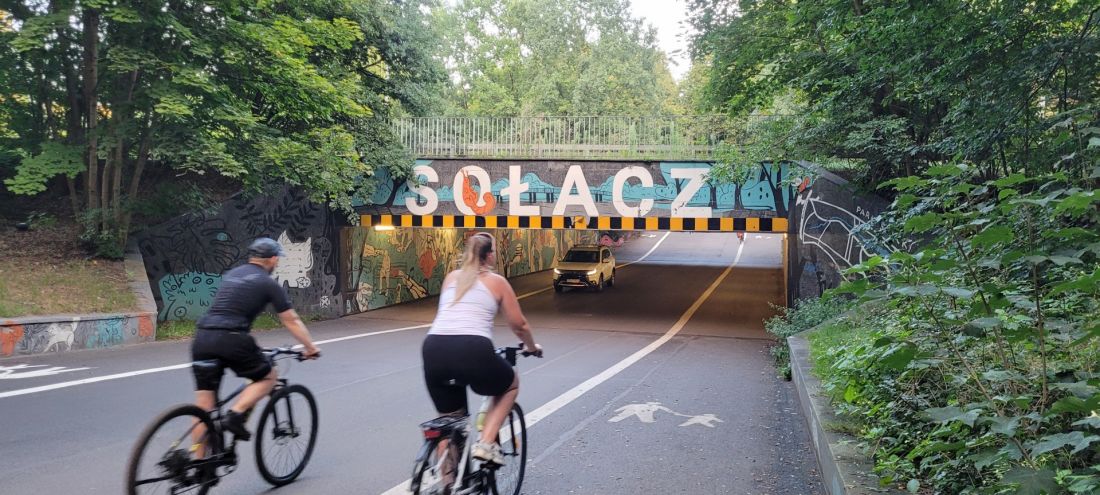
sports facilities in Golęcin, Poznań—the road to Golęcin near Witosa Street, viewed toward Sołacz; here, too, there is a conflict between pedestrian, bicycle, and automobile traffic
Photo: Jakub Głaz
Sixth, and very important: transportation issues. How will people be able to reach the planned arena? How will the increase in traffic affect the neighborhood (even now, during sporting events, the residential neighborhoods of Sołacz and Golęcin are overrun by cars and their haphazard parking). Will the road layout cut through green spaces? What about the already intense conflict between pedestrian, bicycle, and car traffic on the road cutting through the Olimpia site?
Seventh: architecture. The process for selecting the design for the arena and the development plan for the entire Olimpia site should look completely different. The competition proposed by SARP, mentioned here, requires serious consideration, along with the development of up-to-date baseline analyses and a target program for the entire Golęcin area. It is also worth clarifying issues related to users who lease facilities and land from POSiR. What is their actual role today, and what—if any—should their role be in future planning for the sports complex?
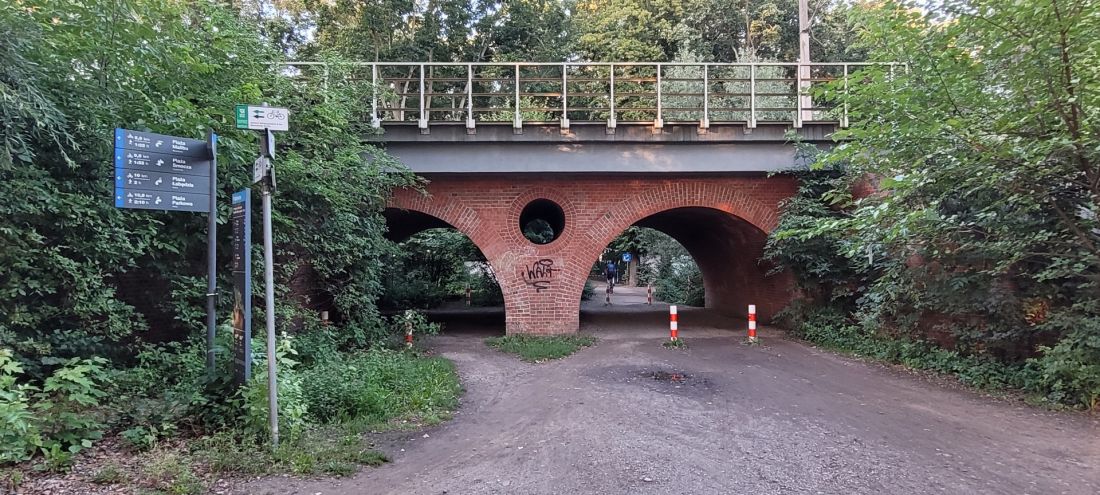
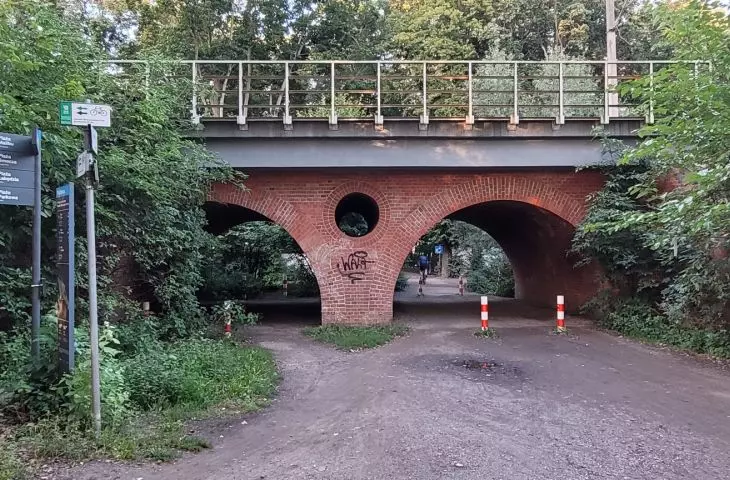
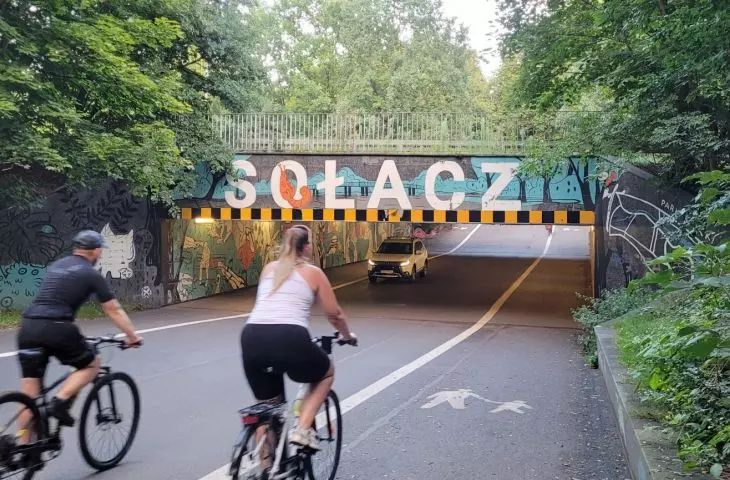
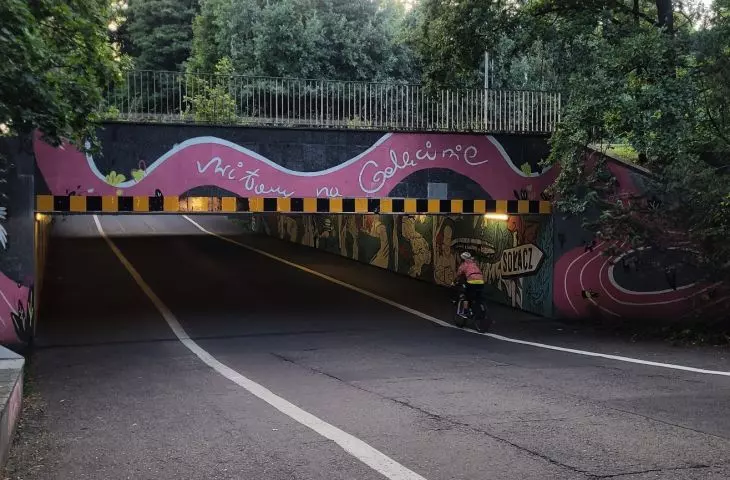
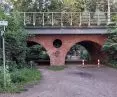
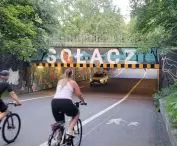
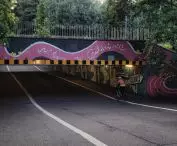
Sports facilities in Golęcin, Poznań—railway overpass, entrance to the Olimpia grounds from the direction of Lake Rusałka
Photo: Jakub Głaz
Finally, eighth, it’s worth considering the perspective of the athletes, who point out that the only ones expressing aversion to the arena are local residents who—as the president of Poznań’s AZS put it— are privileged (due to the attractive neighborhood). Meanwhile, Golęcin, the neighboring districts of Sołacz and Rusałka, and the more distant areas of the western wedge are places frequently and eagerly visited by Poznań residents from all parts of the city. Similarly, Lake Malta in the eastern wedge is a “citywide” landmark; nearly 40 years ago, during the severe crisis of the Polish People’s Republic, a highly regarded and unique regatta course was created—integrated with recreational areas and accompanied by cohesive and interesting architecture (designed by Klemens Mikuła). Today, in times of an incomparably better economic climate, Golęcin should ultimately be transformed with similar talent and cultural sensitivity.